

Why Does Your Ear Feel Clogged? Earwax, ETD, and Hearing Loss Explained
A clogged ear can be surprisingly disruptive. Sounds may seem muffled, your voice may echo inside your head, or you may feel as though water is trapped in your ear. Although earwax is one possible cause, a blocked sensation does not always mean something is physically obstructing the ear canal.
Pressure behind the eardrum, fluid in the middle ear, Eustachian tube dysfunction, an infection, or hearing loss can all produce similar symptoms. At Austin Ear, Sinus and Allergy, patients with persistent ear fullness can be evaluated to determine what may be causing the sensation.
Direct Answer: Why Does an Ear Feel Clogged?
An ear can feel clogged when sound is obstructed in the ear canal, pressure or fluid affects the middle ear, or hearing changes occur within the inner ear.
Earwax commonly causes a physical blockage. Eustachian tube dysfunction often causes pressure, popping, or difficulty clearing the ear. Hearing loss may make sounds seem muffled or distant even when no blockage is present.
Because these conditions can feel similar, an ear examination and hearing test may be needed to identify the cause.
Could Earwax Be Blocking Your Hearing?
Earwax is normal and helps protect the ear canal. It traps dust and debris, supports the skin inside the ear, and gradually moves toward the opening of the canal.
A problem can develop when wax accumulates faster than it can leave the ear. Impacted earwax may partially or completely obstruct the ear canal.
Possible symptoms include:
- A feeling of fullness or blockage.
- Muffled or reduced hearing.
- Ringing in the ear.
- Itching.
- Mild discomfort.
- A sensation that sounds are coming from farther away.
Earbuds, hearing aids, and cotton swabs may push wax deeper into the canal or interfere with its natural movement. Some people also naturally produce more earwax or have ear canals that make buildup more likely.
An examination can usually determine whether wax is responsible.
Could Eustachian Tube Dysfunction Be the Problem?
The Eustachian tubes connect the middle ears to the back of the nose and throat. They briefly open when you swallow, yawn, or chew to balance pressure on both sides of the eardrum and allow fluid to drain from the middle ear.
When a tube becomes swollen or does not open properly, pressure may build behind the eardrum. This is known as Eustachian tube dysfunction.
ETD may occur:
- During or after a cold.
- During an allergy flare-up.
- With chronic nasal or sinus inflammation.
- During air travel.
- While driving through elevation changes.
- After scuba diving.
- When fluid remains behind the eardrum.
Symptoms may include:
- Pressure or fullness in one or both ears.
- Popping or clicking when swallowing.
- A feeling that the ear needs to clear.
- Muffled hearing.
- Discomfort with altitude changes.
- Temporary improvement after the ear pops.
Austin’s seasonal allergens may contribute to inflammation around the Eustachian tube openings, making symptoms more noticeable for some patients.
What Does Hearing Loss Feel Like?
Hearing loss does not always feel like sounds have become quieter. Some people initially describe it as a plugged or muffled ear.
You may notice:
- Voices sound distant or unclear.
- People seem to mumble.
- Conversations are difficult to follow in noisy places.
- You frequently ask others to repeat themselves.
- The television volume gradually increases.
- One ear seems clearer than the other.
- Speech is loud enough but difficult to understand.
Unlike ETD, hearing loss may not cause obvious pressure, popping, or changes with swallowing. However, symptoms can overlap, and hearing loss may occur at the same time as wax or middle-ear pressure.
Hearing loss can develop gradually or suddenly and may affect one or both ears. Sudden hearing loss requires urgent evaluation.
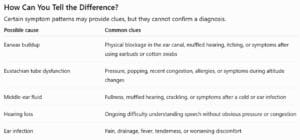
More than one condition may be present. For example, someone can have age-related hearing loss and develop temporary ETD during allergy season.
Can Allergies Cause a Clogged Ear?
Yes. Allergies can contribute to a clogged sensation without creating a physical blockage in the ear canal.
Allergic inflammation can cause swelling inside the nose and around the openings of the Eustachian tubes. If a tube cannot open normally, pressure may remain trapped in the middle ear. Fluid may also accumulate behind the eardrum.
This can lead to:
- Ear fullness.
- Popping or crackling.
- Temporary muffled hearing.
- Difficulty clearing the ears.
- Symptoms that recur during allergy season.
Treating allergic inflammation may help when allergies contribute to ETD, but persistent symptoms may require an examination to rule out wax, fluid, infection, or hearing loss.
Could It Be an Ear Infection?
An ear infection can cause fullness and muffled hearing. The specific symptoms depend on whether the infection affects the ear canal or the middle ear.
Possible signs include:
- Ear pain.
- Drainage.
- Fever.
- Tenderness around the ear.
- Redness or swelling.
- Reduced hearing.
Fluid can remain behind the eardrum after a middle-ear infection has improved. That fluid is not necessarily infected, but it can continue making the ear feel blocked or sound muffled.
An examination can help distinguish an active infection from lingering fluid or another condition.
What About Ringing or Dizziness?
Tinnitus, dizziness, and balance problems can occur with several ear conditions. They may accompany hearing loss, middle-ear pressure, infection, or an inner-ear disorder.
Mild imbalance with pressure does not necessarily indicate a serious condition. However, severe dizziness, difficulty walking, new neurological symptoms, or sudden hearing changes require prompt medical evaluation.
How Does an ENT Determine the Cause?
An ENT evaluation may begin with questions about when the clogged sensation started, whether it affects one or both ears, and whether it changes with swallowing, congestion, or altitude.
The evaluation may include:
- Examining the ear canal for wax or swelling.
- Inspecting the eardrum for fluid, infection, or other abnormalities.
- Evaluating the nose and throat for inflammation.
- Tympanometry to measure eardrum movement and middle-ear pressure.
- A hearing test to identify the type and degree of hearing change.
These findings can help determine whether the problem involves the ear canal, middle ear, Eustachian tube, inner ear, or auditory nerve.
Should You Remove Earwax Yourself?
Avoid inserting cotton swabs, hairpins, ear candles, or other objects into the ear. These methods can push wax deeper, damage the skin, or injure the eardrum.
Over-the-counter wax-softening drops may be appropriate for some people, but they should not be used without medical guidance if you have:
- A perforated eardrum.
- Ear tubes.
- Previous ear surgery.
- Ear pain or drainage.
- A suspected infection.
- Uncertainty about what is causing the blockage.
Having the ear examined can prevent unnecessary or potentially harmful treatment when wax is not the actual cause.
When Should a Clogged Ear Be Evaluated?
A clogged sensation during a cold, flight, or brief allergy flare may improve as inflammation and pressure resolve. Consider scheduling an evaluation if:
- One ear remains clogged for several days.
- Hearing has noticeably changed.
- Ear pressure keeps returning.
- Symptoms do not improve after a cold or flight.
- You experience ringing, dizziness, or balance problems.
- Pain, fever, or drainage develops.
- The sensation interferes with work, sleep, or communication.
Sudden hearing loss in one or both ears requires prompt, same-day medical evaluation, particularly when it occurs with tinnitus, dizziness, or ear fullness. Do not assume a sudden change is caused by wax or congestion.
Do Not Assume a Clogged Ear Is Just Earwax
Earwax is only one possible reason an ear feels blocked. Eustachian tube dysfunction, middle-ear fluid, infection, and hearing loss can create similar sensations, but each may require a different treatment approach.
Schedule an evaluation with Austin Ear, Sinus and Allergy to determine whether earwax, Eustachian tube dysfunction, hearing loss, or another ear condition may be causing your clogged-ear symptoms.