
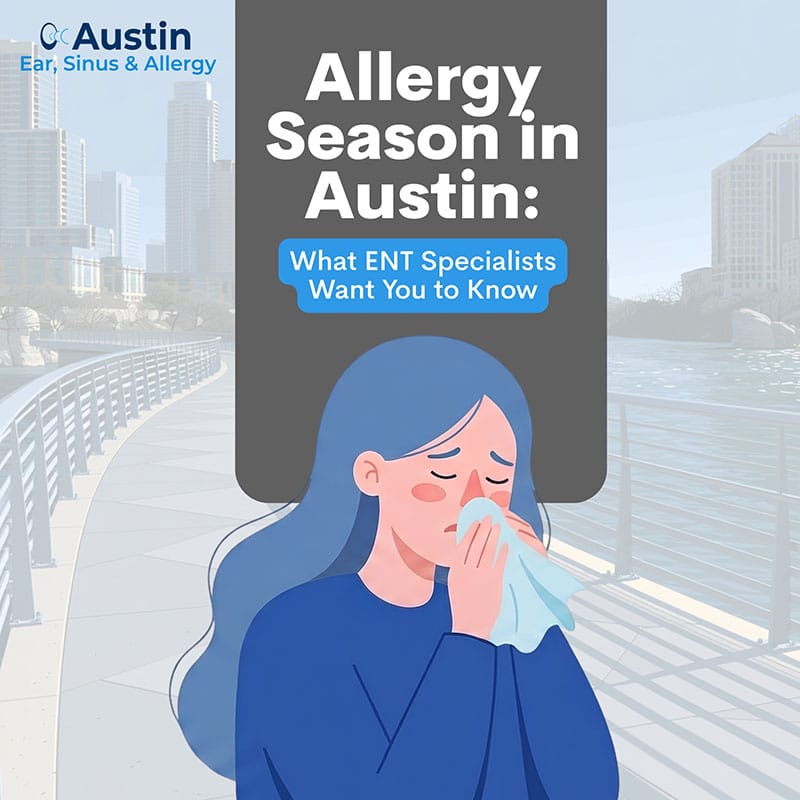
Allergy Season in Austin
What ENT Specialists Want You to Know
Austin, TX, is known for its beautiful landscapes, lively and rich culture, and warm weather that can last almost year-round. It’s a great place to live for many who seek adventures in the great outdoors. While this seems appealing for many, it may not be the most ideal place to live in if you are suffering from seasonal allergies, especially with such a tricky allergy calendar.
Austin is also home to a diverse plant life, and while beautiful, it can cause major issues for many sensitive residents.
This guide from Austin Ear, Sinus & Allergy can help the residents of Austin understand what might be triggering their sinus issues and how they can manage their symptoms.
What Are Seasonal Allergies?
Seasonal allergies, also referred to as allergic rhinitis or hay fever, are allergies that are triggered by pollen released by plants, trees, and grasses.
As the name suggests, seasonal allergies occur during specific seasons in the year, when plants release pollen. Allergy sufferers may experience symptoms during certain seasons or year-round, depending on what could potentially trigger their allergies.
Common symptoms of seasonal allergies include:
- Frequent sneezing
- Itchy, watery, and red eyes
- Nasal congestion
- Runny nose with thin, watery, and clear discharge
- Cough
- Itchy nose, roof of the mouth, or throat
- Postnasal drip, or mucus dripping down the back of the throat
- Fatigue due to poor quality sleep
What You Should Know About the Allergy Season in Austin, TX
Austin, TX, has a rich and diverse plant life, with different plants releasing pollen at different times of the year. Because of this, Austin residents may have to deal with an extended allergy season. Here’s a quick breakdown of Austin allergy season:
- Summer
The summer season is grass allergy season in Austin and throughout Texas. The main culprits include Bermuda, timothy, and sweet vernal grasses.
- Fall
During fall, as with most states, Texas residents will have to deal with ragweed, which is the dominant allergy trigger during this time. Ragweed pollen is light, can easily travel through the air, and spreads all over the state, which can cause major issues for many sensitive individuals.
- Winter
While many states across the country can enjoy a quick respite from pollen allergens during the winter season, the same thing can’t be said about Texas. During this season, cedar pollen takes center stage, causing intense allergy and ‘cedar fever’ symptoms, such as a stuffy nose, sore throat, coughing, and fatigue. Some people report feeling feverish despite not having true fever. Cedar pollen allergy season is especially tough for residents in cities like Austin and San Antonio.
- Spring
The spring season is tree allergen season throughout the state of Texas. The main culprits of Austin allergies during this time include oak, ash, elm, pecan, and cottonwood trees.
Tips and Strategies to Manage Your Allergies in Austin, TX
Allergy symptoms can become frustrating, especially if they start affecting your day-to-day life, productivity, sleep, and overall comfort. There are several ways to manage your allergies, including:
✔️ Limit and control your exposure to your allergy triggers
While you can’t fully avoid your allergy triggers, you can limit your exposure to manage your symptoms:
- Monitor daily pollen and allergen forecasts and plan your day around them. If pollen counts are high, it may be better to stay indoors.
- Keep your windows closed during peak allergy seasons or when pollen levels are high.
- Limit the time you spend outdoors. Avoid heading out during peak allergen times. If you have to go out, maybe plan your outing in the evening, when pollen levels are typically at their lowest.
- If you’re heading out, wear a protective mask to keep pollen and allergens out of your airways.
- Keep your home and surrounding area clean and allergen-free. Wear protective gear when mowing the lawn, trimming grass, or removing weeds.
- Change out of your outdoor clothes, shower, and change into fresh clothes after spending time outdoors. This prevents the spread of pollen and allergens you might have picked up from your time outside.
✔️ Try over-the-counter medications to support symptom management
Some over-the-counter medications may offer support in allergy symptom management. These may include:
- Decongestants
- Antihistamines
- Saline nasal sprays
- Saline rinses
- Eye drops
- Pain relievers
✔️ Look into the possibility of allergy drops
Depending on allergy testing findings, symptom severity, and individual health factors, your ENT doctor may look into the possibility of allergy drops or sublingual immunotherapy.
Allergy drops work by introducing small, increasing amounts of allergen substance into the patient’s immune system. These may be taken and administered at home, via drops or tablets placed under the tongue. In select patients, this treatment is designed to help the body become more tolerant to these allergens, which can reduce allergy symptoms in some cases.
Allergy drops are a convenient and less invasive alternative to allergy shots, which may be preferred by some patients who seek other forms of treatment that don’t involve weekly doctor visits or needles. Your ENT physician can determine which form of allergy treatment is appropriate for your condition and specific allergies.
A note on allergy drops FDA approval:
In the United States, FDA-approved sublingual immunotherapy is available as tablets for certain allergens only. Custom-compound allergy drops are currently not FDA-approved, but may be prescribed for off-label use under strict physician guidance.
Conclusion: Understand Your Allergies With Austin Ear, Sinus & Allergy
Austin Ear, Sinus & Allergy provides allergy testing and sinus evaluations for the residents of Austin, Cedar Park, Round Rock, Georgetown, and the nearby communities. We help patients understand their unique allergy profile and guide treatment options and strategies to support symptom management. If you’ve been struggling with sinus symptoms that worsen with exposure to seasonal triggers, contact our care team to learn about how we can help.