

Top Questions to Ask During Your First ENT Appointment
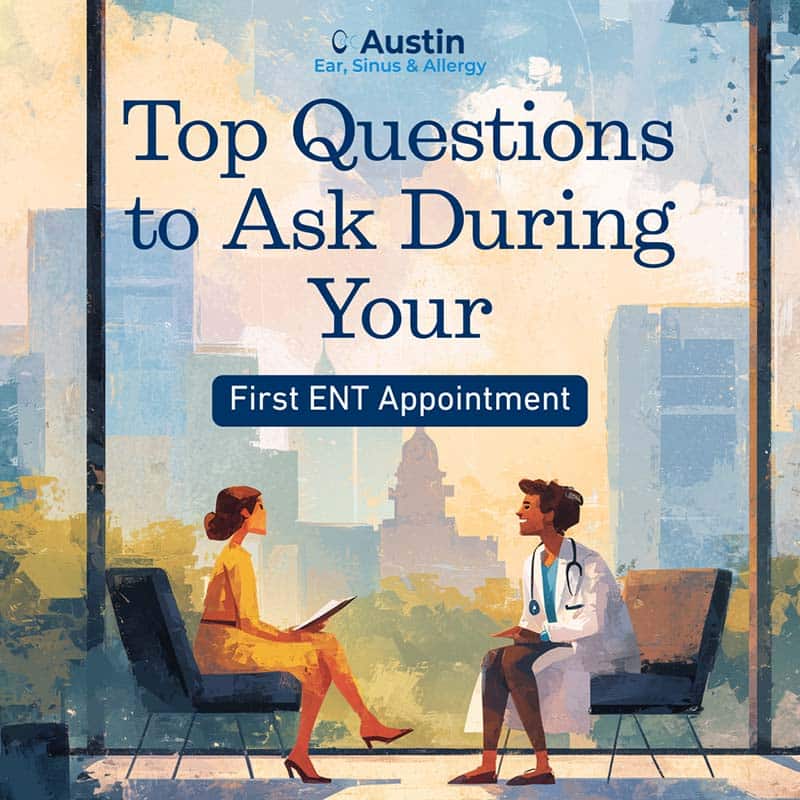
Dealing with persistent, recurring, or chronic ENT issues such as nasal congestion, breathing difficulties, sinus pain and pressure, sore throat, and ear infections can be frustrating, especially if they start impacting your day-to-day activities and comfort.
While your primary care provider (PCP) can address some mild and acute ENT-related concerns, they may refer you to an ENT specialist for more complex issues.
An ENT, also referred to as an otolaryngologist, is a healthcare specialist who diagnoses and treats conditions affecting the ears, nose, throat, neck, and related facial structures.
ENT appointments can be confusing, especially if it is your first. This guide from Austin Ear, Sinus & Allergy can help patients in Austin, TX, navigate their first appointment with top questions they should ask.
Top Questions You Should Not Forget to Ask During Your First Appointment With an ENT Doctor in Austin, TX
For your first ENT appointment in Austin, TX, don’t forget to ask these seven important questions:
#1: What could be the reason behind my symptoms?
During your first ENT consultation, your care provider will conduct a series of physical examinations and diagnostic tests to determine what might be potentially causing your symptoms. However, it’s important to remember that testing is not always required during your first visit. They will determine if testing is necessary after considering your symptoms and their severity, medical history, physical exam, and current medications you’re taking at the moment.
ENT issues can be broadly categorized into three main groups:
- Ear issues: ear infections, tinnitus, hearing loss, ETD, earwax buildup, etc.
- Nose issues: nasal congestion, sinusitis, allergies, nasal polyps, deviated septum, etc.
- Throat issues: sore or scratchy throat, chronic cough, tonsillitis, wheezing, voice hoarseness, etc.
#2: Does my condition require specialized ENT care?
Not all ENT-related issues will require specialized ENT care. Your primary care physician may address some mild concerns. However, they may refer you to an ENT specialist if your condition is more complex and beyond their scope of practice.
An ENT–also known as an otolaryngologist–specializes in diagnosing and treating complex issues and diseases of the ears, nose, throat, neck, and related facial structures. In addition to medical school, they have undergone specialty training in otolaryngology.
During your first appointment, confirm with your provider if your condition will need specialized ENT care.
#3: Can you treat and address my concern?
Some ENTs pursue additional fellowship training or develop specialized clinical expertise in certain areas of otolaryngology. Depending on your condition, your ENT may manage your care or recommend referral to a subspecialist.
After confirming that your concern needs specialized ENT care, ask your care provider if your condition falls within their scope of practice or if a referral to another subspecialist may be more appropriate.
#4: How does my condition impact my overall health?
During your consultation, your care provider can assess your condition and discuss how your symptoms might impact your overall health and general well-being.
For some patients, chronic sinus infections can cause breathing difficulties, which may impact daily productivity, sleep, and comfort. In other cases, a persistent sore or scratchy throat may make it difficult to eat or drink. In some cases, dizziness or vertigo may be linked to certain ear conditions.
#5: What are my treatment options?
Treatment and management options will vary depending on clinical findings, symptom severity, response to previous treatments, medical history, health status, and personal health goals.
Your ENT care provider will discuss potential treatment options and will explain the benefits, risks, and side effects of each option, ensuring that you are making a well-informed health decision.
#6: What can I do to help improve my condition?
It may be helpful for your daily comfort to ask your care provider if there are other things you can do that may help manage your symptoms and support your overall health and well-being. These may include dietary changes, exercise, adequate sleep and rest, and other lifestyle modifications.
These management strategies should be carefully reviewed and approved by your physician to ensure they help with improving your symptoms, and not further aggravate them.
#7: How much does treatment cost?
Lastly, check with your provider, specifically the clinic’s billing office, about the potential cost of your treatment. A cost estimate and insurance and coverage details can guide you in making well-informed healthcare decisions without sacrificing your bank account.
Commonly Asked Questions About ENT Appointments in Austin, TX
What happens during an ENT appointment?
Here’s a general overview of what you can expect during your first ENT appointment:
- You will check in at the clinic’s front desk, where you may have to fill out a short questionnaire about your visit, symptoms, and medical history.
- Inside the doctor’s office, your care provider will carefully examine your ears, nose, and throat. They may use specialized diagnostic tools, such as a nasal endoscope, to get a clearer view of your ear, nose, and throat.
- Your doctor will also review your symptoms and their severity, medical history, medications you’re currently taking, and previous treatments to inform their diagnosis.
- Additional tests may be recommended when appropriate to gather more information or help establish a diagnosis.
- Your care provider will discuss potential treatment options (medications, procedures, surgeries, and long-term management strategies) based on clinical findings and other individual health factors.
How should I prepare for my ENT appointment in Austin, TX?
Here’s how you can prepare for your first ENT appointment:
- Before your initial appointment, list your symptoms, including their severity, how long you’ve had them, and how they’re impacting your overall health and quality of life.
- Collect information about your medical history, family medical history, previous treatments, and current medications.
- Make sure to communicate all the information collected to your physician during the consultation.
- Prepare questions you’d like to ask your doctor.
- Before your appointment, confirm information about billing, insurance, and cost coverage. You can get in touch with your insurance provider or the clinic’s billing office for this.
- Arrive early for your appointment.
- Ask your care provider about treatment monitoring and follow-up visits for long-term care and management.
Conclusion: Be Ready for Your First Appointment With Austin Ear, Sinus & Allergy
Austin Ear, Sinus & Allergy provides comprehensive evaluation and treatment for a wide range of ear, nose, and throat conditions in Austin, Westlake, Cedar Park, Round Rock, and the nearby Texas communities. If you’re experiencing persistent and chronic ENT issues that have started impacting your day-to-day life and comfort, get in touch with our team to learn more about possible underlying causes and potential treatment options based on your clinical findings.