

What Does a Sinus CT Scan Show, and When Might an ENT Recommend One?
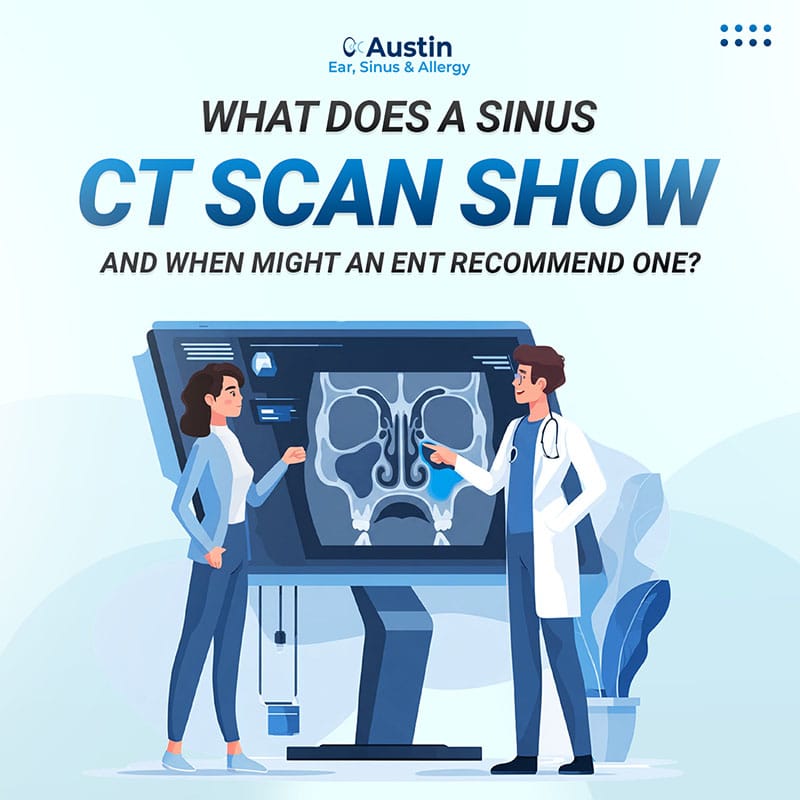
A stuffy nose, facial pressure, and recurring sinus infections do not always tell the full story. Sometimes symptoms continue even after antibiotics, allergy medication, or nasal sprays, making it difficult to know what is happening inside the sinuses. That is often when an ENT recommends a sinus CT scan.
At Austin Ear, Sinus & Allergy, a sinus CT scan helps identify problems that cannot be seen during a routine exam. It gives your ENT a detailed view of the sinuses and may help identify chronic inflammation, nasal polyps, a deviated septum, or other findings that could be contributing to your symptoms.
What Is a Sinus CT Scan?
A sinus CT scan may provide additional information about inflammation or structural findings that could be associated with persistent or recurring symptoms. Unlike a standard X-ray, it shows the bones, air-filled sinus cavities, and soft tissues in much greater detail.
The scan is quick and painless. You lie still for a few minutes while the scanner captures images of your sinuses from different angles. Most sinus CT scans are completed in less than 10 minutes.
Because the images are so detailed, a CT scan helps your ENT evaluate areas that cannot be fully examined during a physical exam alone.
What Can a Sinus CT Scan Show?
A sinus CT scan helps explain why symptoms keep returning or why congestion does not improve with treatment. It can identify both inflammation and structural problems that affect breathing and sinus drainage.
Your ENT may be looking for:
- Swollen or inflamed sinus lining caused by chronic sinusitis.
- Blocked sinus drainage pathways.
- Nasal polyps inside the nasal passages or sinuses.
- A deviated septum that narrows one side of the nose.
- Enlarged turbinates that reduce airflow.
- Fluid buildup inside the sinuses.
- Anatomical differences that may contribute to recurring sinus infections.
These findings help guide treatment instead of relying on symptoms alone.
Why Would an ENT Recommend a Sinus CT Scan?
A CT scan is not necessary for every stuffy nose or sinus infection. It is usually recommended when symptoms suggest there may be an underlying condition that needs a closer look.
Your ENT may recommend a sinus CT scan if:
- Congestion lasts for 12 weeks or longer.
- You have recurring sinus infections several times a year.
- Facial pressure keeps returning despite treatment.
- Nasal congestion affects breathing or sleep.
- Your sense of smell has decreased without improving.
- Symptoms continue after allergy treatment or antibiotics.
The scan helps determine whether the problem is chronic sinus inflammation, a structural blockage, or another nasal condition.
What Happens During the Scan?
A sinus CT scan does not require surgery or recovery time. Most patients can return to their normal activities immediately afterward.
During the appointment, remember to ask the important questions that you may have prior having the procedure:
- You remove glasses, jewelry, or other metal objects around your head.
- You lie on a table that moves through the CT scanner.
- The scanner takes multiple images while you remain still.
- The procedure is completed within a few minutes.
Your ENT reviews the images after the scan and explains what they show during a follow-up visit.
Can a CT Scan Diagnose Chronic Sinusitis?
A CT scan is one of the most useful tools for evaluating chronic sinusitis because it shows inflammation that has been present for an extended period.
The images may reveal swollen sinus tissue, blocked drainage openings, trapped mucus, or changes affecting multiple sinus cavities. Combined with your symptoms and nasal examination, these findings help confirm whether chronic sinusitis is present and how extensive it is.
Can a CT Scan Show a Deviated Septum or Nasal Polyps?
Yes. A sinus CT scan provides a clear picture of structures inside the nose that may contribute to ongoing congestion.
A deviated septum appears as a shift in the wall separating the two nasal passages, while nasal polyps appear as soft tissue growths that can partially block airflow or sinus drainage. Identifying these conditions helps determine whether medication alone is likely to help or whether additional treatment should be discussed.
Does Everyone With Sinus Symptoms Need a CT Scan?
No. Many sinus infections improve without imaging, especially when symptoms are related to a short-term viral illness.
An ENT is more likely to recommend a CT scan when symptoms persist, keep returning, or do not respond as expected to treatment. Imaging is also commonly used before certain sinus procedures because it helps map the anatomy of the sinuses.
The decision depends on your symptoms, medical history, and examination findings.
How a Sinus CT Scan Helps Guide Treatment
The goal of a sinus CT scan is not simply to find inflammation. It helps your ENT decide what treatment is most appropriate for your specific condition.
Depending on the findings, treatment may involve:
- Allergy management if inflammation appears allergy-related.
- Prescription nasal sprays to reduce chronic swelling.
- Saline irrigation to improve sinus drainage.
- Treatment for chronic sinusitis.
- Balloon sinuplasty or another procedure for appropriate patients with blocked sinus drainage pathways.
- Septoplasty or other treatment if structural blockage is contributing to symptoms.
Detailed imaging can provide additional information that, together with your symptoms, medical history, and examination findings, may help your ENT develop an appropriate treatment plan.
Are Sinus CT Scans Safe?
Sinus CT scans use a small amount of radiation, but the amount is generally low and the scan is performed only when it is medically appropriate.
Your ENT will recommend imaging only when the information is expected to help diagnose or manage your condition. If you are pregnant or think you may be pregnant, let your healthcare provider know before the scan so the safest approach can be discussed.
When Should You Talk to an ENT About a Sinus CT Scan?
A sinus CT scan is worth discussing if nasal symptoms continue interfering with your daily life despite treatment.
An ENT evaluation may be appropriate if:
- Congestion lasts longer than expected.
- You have frequent sinus infections throughout the year.
- Facial pressure or headaches keep returning.
- One side of your nose stays blocked.
- Your sense of smell has decreased.
- Allergy treatment has not resolved your symptoms.
These symptoms often benefit from a closer look at what is happening inside the sinuses.
Get a Clearer Picture of Your Sinus Symptoms
Persistent sinus problems are not always caused by allergies or another short-term illness. A sinus CT scan can help identify inflammation, structural changes, or blocked drainage pathways that may be contributing to ongoing congestion and recurring sinus infections.
Schedule an evaluation with Austin Ear, Sinus & Allergy to learn whether a sinus CT scan may help identify the cause of your persistent sinus symptoms.